Thursday, October 6, 2022

South Union Mills Clothing review


Basic kit thats shows up on farmers/long hunters all over the colonies


                So Its hunting season again…thank god.  Squirrel season, early muzzleloader, Halloween movies on 24/7, the upcoming dark dreary days off autumn that cover the land with the smell of dampness and decay that flows into your skull along with the sense you are slowly going mad. Ok wait not that, I’ve been reading a lot of Lovecraft inspired books mixed in amongst early Kentucky narratives again and it can lead to really weird day dreams and a mixing of the information in my head.

                So while updating and fixing gear the past month I picked up some stuff from South Union Mills and after a few emails I agreed to review some of their new 18th century clothes here. I first reviewed some of their stuff back in the early days of my blog (stockings and a frying pan) and have picked up a number of pieces of gear from them over the years.

 I must admit I was a little apprehensive to review clothes as it’s a pretty subjective thing when it comes to 18th century reenactors because the hobbie is so broad that no matter what I say any particular group may nay say my opinion (“your killing the hobbie” from the staunch split front shirt crowd or “actually those stitches should be done with thread made from the eyelashes of left hand cows from oxford” from the fabric police section of the hobbie)

So I’m going at this from the perspective of your regular working class person looking to upgrade their gear from the standard Breeches, shirt waistcoat kit or getting into the hobby. Which honestly is what 99% of the folks who email me questions about. So before I get into the finer points of the review I’m going to have to say right off overall South Union Mills did a great job in the pieces they sent me. For a starter or upgrade to your gear they knocked it out of the park in material, fit and construction.

They sent me a basic man's kit (blue wool coat, wool waistcoat and 18th century trousers) and out of the box they fit me correctly and naturally (I didn’t feel like I was playing dress up in a costume)

One of the first things I noticed wearing the coat is that it wears well. Unlike a lot of vendor made coats out there the top doesn’t flop around lifelessly when you are wearing it unbuttoned. You can tell it has an interfacing to stiffen it up. I’m not into the way the lining is set in, but it’s done well and doesn’t affect the fit. The wool would be a great warm layer to wear during hunting season or spring events.

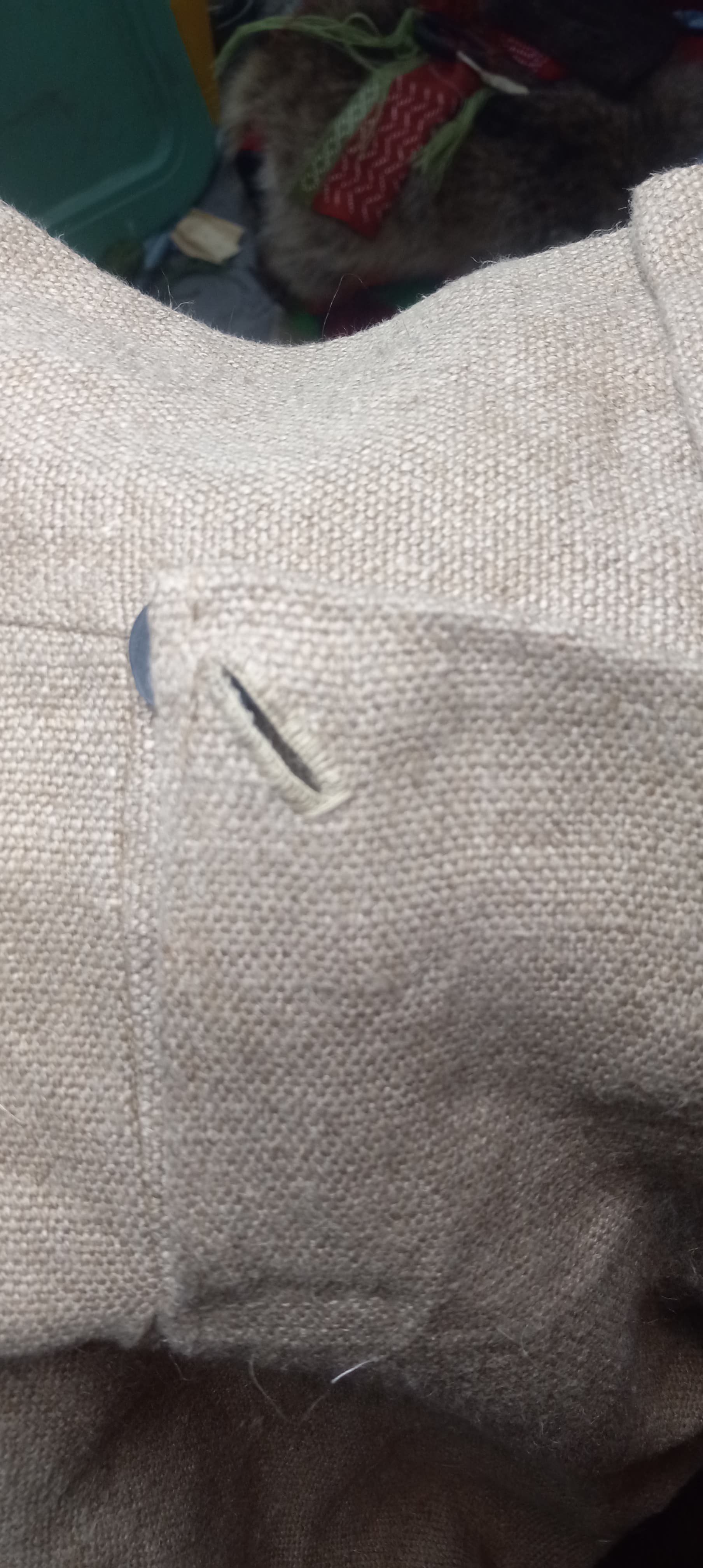
Now for the purist they are machine sewn and hand finished. The topstitching is done well and doesn’t suffer the problem I’ve found in a lot of goods done like this where the top stitching is done in a way to advertise its top stitched (giant running stitches screaming look at me I’m done by hand) and the button holes are all done really well (they aren’t grommets) I also wish the waistcoat pockets were a little deeper and the trousers had no pockets but slash pockets could be an easy tweak you do to them yourself.

I wore the kit to split some firewood and wore it shooting and both activities it was great. It maintained the Proper fit while not feeling weird to load and shoot from the bag or walking. I didn’t run it through a hunting trip or any other oddball adventures because well…I didn’t want to destroy the stuff.   the activities/time I did in the gear though showed that it was well made and should hold up in the field under the usual conditions (you know rain, snow and falling out of trees)

If you are looking to upgrade your Long hunter kit from the 1990’s I totally suggest getting at the least a pair of their trousers.  Especially if you’re like most people and don’t have the time or doubt your skill at hand sewing a pair. If you are going to do any juried events or just want a nice well-made coat for your impression, definitely check these out. Also, the other items they carry (the Cuttoe knives, stockings, frying pans, kettles) are all easy documentable ways to improve your kit and hold up great in the woods. Also they are a source for " Doddridge shoe packs" aka oxhide shoes.

Overall I'd highly recommend to folks looking for an update check out South Union Mills. 

 South Union Mills

And just to add something that isn’t related to a review here is an awesome quote from Heckwelder on how Natives viewed Europeans camps in the 18th century. Pretty dead on for a lot of camps I’ve set up in the woods:

“The Indians say, that when the white people encamp in the woods they are sure to lose something; that when they are gone, something or another is always found which they have lost, such as a knife, flints, bullets and sometimes even money. They Also observe that the whites are not so attentive as they are to choosing an open dry spot for their encampment; That they will at once set themselves down in any dirty and wet place, provided they are under large trees; that they never look about to see which way the wind blows, so as to be able to lay the wood for their fires in such a position that the smoke may not blow on them; neither do they look up the trees to see whether there are not dead limbs that may fall on them while they are asleep; that any wood will do for them to lay on their fires, whether it be dry or wet, and half rotten, so that they are involved during the whole night in a cloud of smoke; or take such wood as young green oak, walnut, cherry, chestnut, &c., which throws sparks out to a great distance, so that their blankets and clothes get holes burned in them, and sometimes their whole camp takes fire. They also remark that whites hang their kettles and pots over a fire just kindled, and before the great body of smoke has passed away.” 

Trousres fit well and made with material that will hold up


Over all kit pretty easy to do alot of impressions with this basic set of clothes

buttonhole detail

another buttonhole close up


Wednesday, June 29, 2022

Foot wrappers... so simple even the Dutchman can make them


"winter footware" for mocs chausons, wool stockings from south Union Mills and wool foot wrappers aka "Nippes"

So I have and haven’t dropped the ball on my idea to keep putting moccasin information out after my initial flood of posts. In the time since the last post, I’ve been spreading the gospel of moccasins at a few events and actually decided to leave the comfort and seclusion of the woods for going back to some events. I’ve also been a cog in the giant machine that is the supply chain so the railroad has been keeping me really, really busy. Thank you to Alex from "the frontier trading company" youtube chanel for asking me the question about this that got me refocused on the subject.

                I’ve also started to venture off this weird platform and trying to put out stuff for mass public consumption in Muzzleloader Magazine so twice as much brain power and time is needed for me to get my thoughts written down and run through a gauntlet of people before I can safely send it to a national publication to be published and keep me from looking like a total raving lunatic. I mean you came here on your own you knew what type of weirdness I might start going off on, those folks paid good money for that magazine. They are Innocent bystanders and might not be ready for a quote from James smith leading into a Lovecraftian hellscape of inside jokes and self-loathing.  But that’s why I love you, you get it or hate it enough to keep reading this slow descent into madness.

                So the Bulk of the moccasin making pattern stuff is going to be moved to a Muzzleloader article. Sorry Just thought it’d be a better platform for it where it can do the best. Spread the love, show We’re not a punk rock band we’re new wave.  That being said For this I thought I’d go a little more in depth on making foot wrappers and chausons. I’d mentioned them before but never really went into any detail on them apart from showing them.

                I know right now it’s 90 degrees out and the last thing you are probably thinking about is winter foot ware but the new hunting License just came out here In Pennsylvania and that is all the information that I need that I need to start thinking about winter hunting. Better to be sewing on your porch in the shade in July then to be shivering in the woods in December wishing you had been sewing.

                My winter Moccasins are a high-top vamped Moccasin I made from bark tan and the only thing that makes them my “winter” moccasins is the fact I made them a little big. Big as in during the warmer parts of the year I can simply wear a pair of foot wraps or stockings with them and they fit fine. However, in the winter months I can add chausons or footwraps over stockings to add to the layers. That is a giant plus in the Moccasin factor during cold months shoes have a definite end point for layers. Moccasins have a little give to them so adding stuff isn’t that hard. For the end point is when it gets hard to move your toes. Sounds dumb but if you can wiggle your toes it means you can keep your blood moving when sitting still.

                Pouchot mentions the use of some kind of foot wrap in his memoir: “They wrap their feet with Pieces of blanket, and the sides of the shoe form a half boot which prevents the snow from getting in, while their feet would freeze with European shoes, as many have unhappily proved  

                So here he’s describing using some kind of cloth to wrap the foot and keeping the flaps of the Moccasin up. Also he mentions the impracticality of wearing shoes when traveling in the winter. Like I said you can only put so many layers in a pair of well fitted 18th century shoes.

                A British soldier Henry Kent mentions something similar being worn with moccasins in his 1814 memoir:” Three pair of stocking and a square piece of blanket wrapped on my feet”

                Kent is kind of stocking happy in my opinion but hey he’d know how cold it got in Canada hiking thru the snow. Plus he gives a little more detail on at least the shape of the foot wrap.

Peter Kalm also mentions this in his extensive notes on the dress of Canadians and natives: Instead of stockings, they wrap their legs in pieces of blue cloth, as I have seen the Russian Boors do  

This one is super interesting because his mention of the Russian use of them may point towards them wrapping them like the “Portyanki” that was in common use in the Russian sphere of the world until the 2000’s.

Also for a non candian point of view on this Thomas Rideout mentions something similar while he was a captive among the Shawnee in the late 18th century: A Pair of Moccasins, In which I had pieces of Blue Cloth to make my step easier

                Whats kewl about this is Rideout seems to be talking about wearing these in the warmer months. I’ve found that any type of footwrap in moccasins in the warm months adds just enough cushion for your feet that it makes doing long distances way easier.

 Face it unless you do a lot of barefoot walking in your modern life Moccasins can be tough on our bodies that are so accustomed to modern shoes. I’ve found this is especially true when you are doing a lot of standing/walking at modern historic sites with concrete floors and blacktop walk ways. My legs feel it way more after a weekend at a site then I do after a week of woods walking.

These wool pieces may be the “Nippes” that the Millice is issued in Canada. They are given” Half aune of cloth” as part of their equipment issue. A french Aune is about 47 ¼ inches. Now are these pieces cut in half or into quarters? That’s a question I cant answer but it does at least give you a starting point for the piece of material needed to make a “nippe”.

So here is my interpretation of the info…I use scraps of wool blanketing that I have left over from making a blanket coat. I cut this into a square roughly 14  by  14 (I wear a size 10 shoe)   I lay it out like a diamond Put my foot in the center and wrap the sides in on top of each other then wrap the front over my toes and slide my foot into the Moccasin. Bam! Done it really is that easy.  Want another layer? Lay down two on top of each other.  Hey my feet are wet? Take your moccasin off get a dry pair out and bam dry feet.

basic foot wrap...its my workshop floor please excuse the mess

foot in center...I think i need to buy new stockings

tuck tip of side under your foot


after bringing the toe up hold this until you slide it into the Moc

rear just slides in and up.

ready for the elements


These are easy to pack, easy to make, and dry really easily over the fire.  I’ve mentioned this before but I take my soapstone bullet mold and heat it up next to the fire and wrap it with a spare foot wrap to put in my blanket roll for a footwarmer when it’s super cold out.  Want some cheap entertainment throw a wet foot wrapper at a dutchman’s head when he’s trying to sleep. Hours of entertainment and fun for the whole family.

So the foot wraps are pretty…simple. Yes, I’m aware of quotes of using leaves/deer hair etc but so far I’ve not found a way that I can make that process comfortable after a lot of trial and error. I ve found Buffalo wool works pretty well but to be honest people have more access right now to wool scraps then they do buffalo hair.  So chausons are up next but that is a little more involved so my next hotel stay its on the docket.

To break up the foot pics I’ve included some from this years Martin’s station event. For folks that missed it, well you missed a great one. A number of ACM folks came down to support Billy and the crew and we had a blast. I got to sleep in a Cherokee winter house, play cards in a block house and hang out with folks I haven’t seen in years.

I also attended my first “military” event in years. The Yankee Peas Mess from Wisconsin held an immersion event at my old stomping grounds Fort Roberdeau. I went with a few ACM guys to portray members of Cluggage’s ranging company for the weekend with the guys from Crockett’s Western Battalion and it was an awesome time. Two events back to back that really reignited my love of this stuff. Wresting matches, all night patrols, Blanket coat scarecrows and new friends. I forgot this hobby was more then shooting deer and trapping raccoons.  Of course now my daughter wants to do events again so after sewing clothes for the ever growing kid I think I’ll be off to more events this season. Dam I’m sounding positive and happy…real articles and even a podcast interview by I LOve muzzleloading ..less weirdness and esoteric jokes…this cant be normal. This must be some kind of conspiracy from the Dutchman. Gawd I hate that guy. This is some kind of german hex I know it.

ACM crew at Martin's Station

Talking Moccasins with the Dutchman's help

Hanging out with Anthony

relaxing

Talking scarecrows with Krause and tony In a lead smelt at Roberdeau


Wednesday, November 17, 2021

Pumps of their Own Manufacture Part 4: " for want of a proper needle or awl"


Andrew foster Moccasins 1790s

Knots on pucker threads like Ny Cabin Mocs


“Many of the men, in their hard march on an icy road, were entirely barefooted. I got a raw hide to make them moccasins; but made a bad hand of it, for want of a proper needle or awl” Charles Wilson peale On the march to the battle of Trenton


So We made it out the other side Folks the 4th and almost final Instalment. Pat yourselves on the backs We all kept this from careening into off the rails into the sad level of performance art. I’m proud of Us, all of us, even Duane. Who in spite of his Ethnic handicap of being Uber Deutsch can be a useful member of society. I mean not polite society obviously but That’s Neither Here Nor There.

                So There are two more Cabin Found Moccasins from Pennsylvania I’ve seen but I’m not in a position to publish the images in a public forum such as this. So in typical reenactor fashion I will state they 1) are both sewn using leather whang 2) 1 has 4 holes around the flaps for what appears to be attaching a “moccasin string” 3)one is whip stitch The other has baseball stitching 4) stitching on heel on both only goes to ankle bone. Sorry Best I can do for right now but hopefully sometime in the near future that will change.

So Lets look at the common features in all These Moccasins:

All Sewn with Leather Whang (as mentioned by Doddridge)

Majority had some type of Moccasin String attachment

Flap only sewn to ankle bone.

 basic pattern

Ok Common feature #1 Leather Whang. Most folks are probably thinking this is easy. Cut leather and sew Moccasin done. I’ve found that this takes a little more Prep work then that. So we’ve all learned to cut leather lace by simply cutting along the edge of a circle of leather round and round until we have enough lace. Easy, no thought right?  I’ve found that this is a terrible idea with any of the German tanned leather that folks commonly use. It is also not a great way to cut thin lace/whang with brain or bark tan leather.


   For sewing whang I have found it best to cut long sections of lace with the grain of the leather. For most Moccasins you don’t need more then 8-12 inches of lace for each center seam of the moccasin. I cut the lace with the grain of a piece of leather Then I wet that piece and stretch it out. I will run it back and forth over a piece of wood to get all the stretch out I can. The friction also starts to dry the whang. I will then cut a point on one end of the lace and lay it out to dry. Once its dry I rub that point over a piece of bee’s wax and roll it between my fingers into a point.

                I repeat this with a number of pieces of lace and then store them all in my Moccasin making kit. You now have pre stretched moccasin making whang to sew up moccasins or attach soles to Moccasins. The waxed tips act like Needles and make it easier to sew thru the awl holes. This will break way less then the whang cut in a circle method as cutting with the grain removes the weak spots. For Moccasin strings Or other long pieces I still cut it in the circle method as I’ve found it doesn’t  go through as much tension as sewing Moccasins into puckers requires.

                ***The best stuff I’ve found for making Iron cable like lace is Squirrel or Ground hog Hide cut along the grain. Super tough stuff and I’ve used it in the rawhide form and it’s tough and awesome to work with. So don’t tosss out those squirrel hides tan them or rawhide them they are usefull)


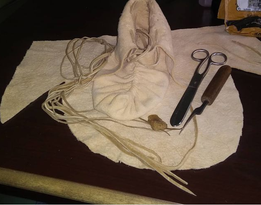
Moccasin Kit on Left of Image


    I'd also like to Kind of address a an Item that drives me crazy..Scissors and awls. Ok so honestly all you need is a sharp blade to cut out Moccasins. I've done it with scalpers, cuttoes  and scissors it's not rocket science. However the scissors you use is well for a guy like me a big deal. The Chinese scissors have no basis in the 18th century (unless you are doing bansai tree stuff in a 1770s setting) Burn them, forget them toss them on the fire Pile with Pennanular brooches and never look back. Do it for the children! chinese scissors fund terrorists! possibly? maybe? I dont know they are just bad.

So Ready cheap scissors I'm pushing people towards are from Burnley and trowbridge:

Dressmaker Scissors - $15.00 - $16.00 - Burnley & Trowbridge Co. (burnleyandtrowbridge.com)

Awesome scissors, way better then the Chinese terrorist scissors that hate children.


As far as Moccasin awls you have a few sources out there. My current personal favorite route Is Ken Hamilton. My main two awls are one by Ken and one by Rick Guthrie. Of the two Ken is the one who is currently making awls sadly enough (RIP Rick) and Ken is pretty good at constant production and someone who knows a thing or two about making moccasins. I try and carry two awls as thats what it seemed the BWM hunters bought. I've actuly tried using straightened fish hooks...it's terrible.


So The part of wearing Moccasins that Is the downside is that you should really have a moccasin repair kit. I Look at this like owning a Jaguar. It’s cool but your gonna need to do some homework and buy some tools to Keep it working  (see footnote *1). Doddridge himself describes Moccasins repair:

The moccasins in ordinary use cost but a few hours labor to make them. This was done by an instrument denominated a moccasin awl, which was made of the backspring of an old clasp knife. This awl with its buckshorn handle was an appendage of every shot pouch strap, together with a roll of buck skin for mending the moccasins. This was the labor of almost every evening. They were sewed together and patched with deer skin thongs, or whangs, as they were commonly called.

This is a constant Issue in any frontier Narrative "making shoes". Along with this you need to reailse that you need to be able to constanly replace the "shoes" that wear out. No Moccasin Kit you might have messed up.

Even Felix walked mentions he might have made a mistake:

May 10th. We staid on the River and dressed an Elk skin to make Indian Shoes--ours being quite worn out.


11th. We left the River, found the Mountains very bad, and got to a Rock by the side of a Creek Sufficient to shelter 200 men from Rain. Finding it so convenient, we concluded to stay and put our Elk skin in order for shoes and make them.


14th. When our Elk's skin was prepared we had lost every awl that we brought out, and I made one with the shank of an old Fishing hook, the other People made two of Horse Shoe Nails, and with these we made our Shoes or Moccosons.

So he has to use a fishhook! But honestly if you think about it the walker narrative of making Moccasins shows how important a skill it was and Just how easy it is. It’s also an awesome break down of just how long it took someone in the 18th century from Green Hide to footwear. It seems they went from May 10th with a green hide to may 14th with a hide they deemed tanned enough to make Moccasins from. So it’s kewl when your buddies on Instagram show their week by week with a hide to a nice fluffy brain tanned hide smoked to an exact shade that has the Zoolander blue steal look. But really   All they needed was a semi tanned hide, way to cut it into a basic shape and a way to punch holes in it to pass lace thru.

Walker also mentions making new “shoes” a few times so It shows that Making Moccasins was a constant issue. As one would think it was a skill that would pop up time and time again. Also it shows that the pattern was so basic that it wasn’t like these guys needed to carry a paper copy with them to make a pair. It’s as if all they needed was string and spit to lay out a pattern, Doesn’t it Duane. (Bam! Dutchman Burn!)

So I’ve included a picture of my Moccasin Kit. I’ve used a dog eaten Moccasin to house all the tools I need (it also doubles as my sewing kit) Moccasin Awl, Leather Whang, Large eyed Needles, Scissors and bee’s wax.  I also carry sole leather and some leather scraps.

                So along with this I will however carry spare Moccasins as well. This is especially helpful in the winter when setting up camp for the night to allow the pair from the day to be dried out. This brings me to a practice that I feel a lot of people just plain get wrong. Moccasins are going to get wet. Period full stop No amount of bee’s wax grease solution is going to waterproof your moccasins. You are going to get wet feet, you signed up for this stop trying to find a “fix”.

                With this you are going to have to dry out your Moccasins at night. The absolute worst possible thing you can do is Put your Moccasins too close to the fire. They are not drying they are cooking If you see them “steaming” they are probably too close. Keep your moccasins near the fire to start to dry out (near not In the fire) Then when you go to sleep lay the moccasins under yourself in your blankets and let them dry some more from body heat.  They will not be “brand new Moccasins” dry but they will have dried out and not be Hard leather Potato chips that will start to wear out as soon as you crunch them on.

                I am a firm believer in greasing my moccasins with Tallow/bear grease. I have found it keeps them alive longer for the climate that I hunt in. I have seen stuff from guys like Ike Walters who swear up and down to not grease winter moccasins. Honestly, I believe him, He is also in a far colder area then I am. If I’m up his way I’m not greasing my moccasins.

 They Key for what to do with Moccasins in the winter in your area is Ultimately up to you. Get out there in the rain, snow, Mud and all the terrible months that end in Y in your Moccasins and see what works for you. Just Please don’t do it in Felt boot liners (come on you are better than that. I believe in you…Duane has his doubts but I think you’ll make the right choice. Don’t prove Duane Right he’s a terrible person)

Majority had “moccasin strings”

                This doesn’t really need much explanation. As I’ve pointed out attaching ties to a moccasin seems to be a common practice in both the few examples that survive and mentioned anecdotally in the narratives. Tying moccasins to your feet or tying up the flaps to keep debris out of the moccasin really seems like a no brainer if you’ve spent anytime in the woods wearing Moccasins. I’ve attached an Image of the Andrew Foster Moccasins. These are a pair of moccasins made for a white guy in Detroit possibly by other white guys (Detroit had a large Moccasin making economy among the French). Note the holes on the front and the attached lace for securing them. These Moccasins are amazing but I’m partial as I saw them everyday for a year.


Rear seam only sewn to the ankle bone.

This for me was another “how did I miss that!” after Mike “I hate unicorns” Galban pointed it out to me on Native Moccasins. For years I had been sewing the seam up to the end of the flap based off one High top example. Then Mike had to use logic and make me feel stupid. This is true on the “European” moccasins as well. The rear seam is only sewn to the top of the ankle bone and the hanging flaps are left free. Even the Ligonier Moccasin is Half true on this (It really does have 2 sets of flaps)

So I'm going to end this here and in  the last Episode we will cover just how to pattern a pair of Moccasins. By then you should have the leather, the tools and the overly inflated sense of self worth that goes along with the Dutchman method of making Moccasins. We can all do this together. I believe in you even if Duane Doesn't.


Thursday, November 11, 2021

Pumps of their own Manufacture Part 3:" " I can, with these on, outrun any British devil "


" I went home and prepared two pairs of new, strong buckskin moccasins, saying to my wife, " I can, with these on, outrun any British devil that has crossed the sea ; and if I have to run after him, I can catch him ; but if he chases me, he never can overhaul me. So I am ready for a race either way, according as either offers the best chances." Meshach Browning


                So, we’ve made it to part three. I’m proud of us, me for focusing enough to finish a thought and you for putting up with a crazy person for this long. It really says a lot about your character. You are good people and I don’t care what those other people say about you. However I’m Going to warn you this one is going to be a long one. I’m sorry but it has a lot to say… So just what does Part Three bring us too… let’s talk about the 80/90’s again! Ok here me out….

It’s the late 80’s early 90’s . You love history and anything to do with “rifle culture” You’ve watched Johnny Tremain,, the Swamp fox , Last of the Mohicans (all versions son, BTW Lon Cheney had an uncredited part in the silent version so horror/history geek moment) and of course you neeeeed to buy books to read in between episodes of “Hawkeye” staring Wonder Woman Lynda Carter (yeah kids it did get that weird) but you have all of the Alan Eckert books what do you do?

If you are like me, you ask your very aggravated parents for Rural Pennsylvania Clothing by Ellen Gehret and The Frontier Rifleman by Richard B Lacrosse. Then when you get them both you freak out! Anyway Lacrosse’s book before a lot of other venues was a great place to get a ton of information on the backcountry. It has the artifacts like a “sketchbook” but also, he took the time to break down clothing/equipment/tactics quotes. So if you are an eager student you could then track down all the books he listed to learn more. Don’t take it for his word for it here are the sources. (crazy idea in reenacting sometimes I know)

Ok so what does this have to do with Moccasins? Did you go off the rails again? Is this the part you yell about the imaginary Duane person? (He is real I assure you, and he is terrible) The point is that in Lacrosse’s book he showed a number of pieces of original footwear and the collections they were in. It showed a pattern of the Ligonier Moccasin and listed its location. It was awesome you could verify stuff they had shown and see the original piece.

One item Listed was a “shoepack” (because it had a sole attached and we’ve already discussed that means nothing!) That came from a Cabin Wall In New York. The problem was it was listed in a” Private collection” so seeing the original might not be in the cards. So, Me being Me during a worldwide Pandemic needed to find all the Moccasins I could. So, I began a game of telephone to track Down Mr. Lacrosse and see if he could even give me a clue where to start looking for said Moccasin. Think of it as the Da Vinci code but way less interesting but somehow with the same bad haircut.

So eventually it all paid off, I was able to get ahold of Mr. Lacrosse and he was able to give me all the information I needed. I was also able to get permission to publish images of the Moccasin to go along with the dead-on Pattern that was made up by Irv Tschanz. I was also able to Thank Mr. Lacrosse for my and Alan Krause’s Gen X Appreciation for his book and how rocking it was. To this day if I’m thinking of a quote I grab a copy of the book to see if I’m right as the kids would say #fanboy.

So Here is the soled Moccasin found in the wall of a New York Cabin lets discuss…


I’ve also added The pattern I hope this will help in dissecting the points I want to hit. Ok so first off European tanned leather:  smooth side and a rough side: ok I don’t want to get too weird on this but this may point towards a euro made moccasin or a native making a moccasin with European tanned leather. It also may point to any number of equations, one thing I don’t do is doubt the Haudenosaunee so on this matter since it was found in a white guy’s wall, I’m assuming it belonged to a white guy.

                This is the part it gets cool for me. The moccasin has similar characteristics with a number of native moccasins. Most notably the  Ganondagan Site Moccasin that Mike Galban covers in his video and things like the Knots from the Andrew Foster Moccasins collected in the great lakes.

The similarity to the * site moccasin I see is the use of a small number of large puckers. A get it done quick type of Moccasin. The “Lacrosse moccasin “  ***(this is now and for ever the official name of this Moccasin from the book The Frontier Rifleman by R Lacrosse so sayeth the followers of Guthrie, amen) *** has 8 gathers across the front which I really not that many and simple to do. For example the Andrew Foster Moccasin that has a similar “knot” set up has 22 pleats per side. It’s some TINY stitches.

                Ok lets go after some other features that may have been missed. The moccasin has 4 holes (2 in the front at the edge of the flaps and two in the back) this appears to have been for the use of some kind of tie to both secure the moccasin on the foot as well as tie up the flap. This detail Doddridge mentions keeps popping up as well as in other sources. My boy Meshach browning mentions : making it ready to tie my knife on with my moccasin string” Honestly I don’t have the time to cite all the “moccasin strings” references. They were as common as shoe laces People think about it!

                The Moccasin is entirely constructed using Leather Whang except for the section holding the pleats together. I feel like this has a simple explanation. The leather Wang broke between the toe and the top and a simple thread repair was all that was needed. If you are going off the construction method of the foster moccasins (done in a similar fashion) this is  pretty easy to see .I feel the linen thread was a quick repair based on the rest of the Moccasin using Leather Whang.

The Sole is sewn so you don’t step on it while walking. You don’t want to walk on the threads holding your sole on. They will break or wear out. The threads are on the sides of the Moccasin to allow for replacement of the soles as needed.

“Ok this works for this particular moccasin how common was a soled moccasin? Outside of New York” Ok valid question and after seeing this moccasin a number of other period quotes began to make a lot more sense. Ok first off lets go full Alan Eckert for this. So you are Simon Girty and you really hate white people and all they stand for you most especially hate Duane and all his duetchness but Justin lets him shoot at you from Fort Pitt and this happens:  “It happened however that a piece of thick sole leather was in his shot pouch at the time which received the ball This starts to pop up more and more if you look in the narratives:


“He was surveying down on Licking. The bullit struck another man's powder horn, went on into his shot pouch, and striking a piece of leather, glanced off again, and struck McKiuney in the nipple, sinking into his breast--but he drew it out by the thread of his shirt, which was not broken. Shane interview Mrs. John Mckiney”

And if you look stuff keeps popping up but a little weirder:

Ate the soles of their moccasins” Logan to Lyman Draper

And if you look around the weirdness is spreading:

17th [February 1766] I got a pair of Mogoseens that David Moor mended for me he soled and heel tapd them and I found the thread he charged 11s/Bay old Tenr. (Diary of Matthew Patten of Bedford, NH from 1754-1788) Thanks Steve!

It doesn’t matter though because much like a Blumhouse horror movie the monster was around before you could understand it:

"Their Shoes, when they wear any are made of an entire piece of Buck-Skin; except when they sow a piece to the bottom, to thicken the Soal. They are fasten'd on with running Strings ,the Skin being drawn together like a Purse on top of the Foot, and tyed round the Ankle. The Indian name of this kind of Shoe is Moccasin"The History and Present State of Virginia,in Four Parts:

By Robert Beverly, 1705, 

 From this we can see that putting a thicker sole on a moccasin was a common idea/practice for both Natives and Europeans. So, looking at this doesn’t the Ligonier Moccasin make more sense? “sole leather” is a term I saw pop up a lot in the past but always ignored until I understood why It Mattered. If you are carrying spare soles for your moccasins, it saves a lot more space then carrying entire hides to replace those moccasins.

My favorite mention of the soled Moccasin however has to come from My man Meshach Browning “Having a pair of moccasins, which were soled with stout leather” . It’s so simple it’s faultless. He was using Moccasins with thick soles attached. Done. I have to admit before this I was on the ambiguous side of the argument. I’m a doubting Thomas what can I say I need to see the info. The more I looked however it seemed that this was a normal practice and it made total sense.

Of course, I needed to make a pair as soon as I got the Information on it. I used the basic outline of the Galban DVD and tweaked it a little. I also used Bark Tan by Matt Weatherholtz again on the body to match the leather and was able to get some thick bark tan from Bill Schneider to make the soles. The only tip I really have for adding soles to your Moccasins is to simply wet them and step onto them. This helps show you the line to use for stitching the moccasins to the soles in a place you wont step on them.So Thats it for Now next up I'll cover construction tips and laying out a basic pattern you can use as a starting point for making different style Moccasins.


Monday, November 8, 2021

Pumps of Their own Manufacture Part 2 : The Ligonier Thing vs Shoe Packs


"a single piece of leather with the exception of a tongue piece on the top of the foot. This was about two inches broad and circular at the lower end" 


     So We’ve covered a little bit about Moccasins but lets push in a little more. One Item that Pops up is the “Ligonier Moccasin”. This item is a Potato chip looking piece of foot ware that came out of the Fort Ligonier Site in Western Pa. The site was a treasure trove of pieces of shoes, horse tack and assorted leather gear. When “preserved” this item can be seen to be a foot shaped potato chip.  Ok honestly it’s a leather “slipper with a sewn on sole and flap (best generic description I could think of).

                The earliest I can find this described as a “shoe pack” is in the Sketch book 76. A simple pattern is shown made off the artifact pointing towards it being a “shoepack”. Ok so why is this a shoepack? Well that is because our Buddy Joseph Doddridge Mentions a shoepack in his memoir:

                Almost every family contained its own tailors and shoemakers. Those who could not make shoes, could make shoepacks. Those, like mocassons, were made of a single piece of leather with the exception of a tongue piece on the top of the foot. This was about two inches broad and circular at the lower end. To this the main piece of leather was sewed, with a gathering stitch. The seam behind was like that of a moccason . To the shoepack a sole was sometimes added.

                In this description the sentence “To the shoepack a sole was sometimes added” is all that links the artifact to the object being described. If you go back and look at the other details being described you’ll clearly see they don’t add up.” made of a single piece of leather”? nope it’s supposedly three sperate pieces. tongue piece on the top of the foot…. about two inches broad and circular at the lower end. Nope No tongue piece at all.

                It’s also often here that people mix in Doddridge’s description of the flaps of the moccasin. He however describes no flaps on the Shoe packs. I mention this because I have heard this from a number of people and have done it myself in the past. This is why it’s a good idea to reread the classics every so often it keeps ya honest.

                Ok So now that I’ve torn apart that idea let’s start putting wood on the bonfire. In September of 1755 Adam Stephen writes to George Washington about a party going after Natives : The Indians discover our Parties by the Track of their Shoes. It would be a good thing to have Shoe-packs or Moccosons for the Scouts. – So here we have an “one or the other” Mention of Moccasins and shoe packs. In 1764 The lists of goods given to returned captives lists shoes, Moccasins and Shoepacks separately. In Runaway ads Moccasins and Shoepacks are mentioned showing they are different items:


Augusta County, in Virginia, June 6, 1768.

RUN away from the Subscriber, living near Stanton, the first Day of May last, a Convict Servant Man, named Michael Ferral, about 28 Years of Age, of a fair Complexion, has pale curled Hair, is about 5 Feet 9 or 10 Inches high, thick lipped, round shouldered, and small legged; He had on, and took with him when he went away, a brown Coat, and Jacket, bound round with Worsted Ferriting, Buckskin Breeches, and a Fur Hat, all about half worn, two Pair of Worsted Stockings, one Pair black, the other blue, and a Pair of Shoe packs on his Feet. Said Servant pretends to be a Doctor, and a Weaver; he has with him a Bank Note, upon the Bank in London. Whoever takes up said Servant, and brings him to his Master, or secures him, so that he may get him again, shall have FOUR POUNDS Reward, paid by me


so here is a period quote for you:  they have soles as thin as the top which envelopes all the foot at the height of the quarters; then, on this piece of leather, one sews a smaller piece of leather covering the top of the foot . Describes an item somewhat like Doddridges description of a shoepack? Single piece body, Upper vamp. This quote is from Jean Baptiste D’Aleyrac describing Canadian Ox hide shoes. There is quote after quote about Canadian oxhide shoes that to me has always sounded like Doddridge's description. Then Looking at extant pairs I was more convinced.

                I was mulling over this for a long time then I read the book  Frontier Seaport Detroit’s Transformation into an Atlantic EntrepĂ´t  by Catherine Cangany. The book really does a deep look into the Moccasin Industry around Detroit and its effect on the local economy (good book ! get it! She’s also a Buffalo Trace fan, weird huh). It also has some interesting notes of the French Moccasin makers ledger books. The folks making Soulier De Boeuf change the term to “shoe pack” when Detroit enters the English sphere of influence during the 18th century. Not to “English shoe pack” or any other things that differentiates them. In fact they keep making shoepacks into the 19th century. The “French” item that looks like Doddridge’s description is probably just that.

                Ok so if the Ligonier thing isn’t a shoe pack what is it? Some folks have claimed it was a frontier “Ghillie Brogue” because for some reason white people want everything to be Scottish. My take on it is that its just what it looks like a European version of a moccasin that has been patched. The idea behind the Item is that it was originally made in 3 pieces but one detail to me shows that might not have been the case. On the toe of the “thing” there is a section of puckers or gathers. Puckers on moccasins help pull the seam up over the toe so you aren’t walking on it. If this was made in three separate pieces the Puckers wouldn’t have been needed or even wanted in the construction. The seam would simply continue down to the sole.

                When you wear moccasins and they start to wear out almost immediately. After patching and repatching moccasins, I’ve found at a certain point you really don’t have anything left to patch too. However, you can cut a uniform line on the edge and stitch (with leather whang by the way) to a sole piece of leather. The odd stitched on flap? Simply that adding a decent flap onto a junk piece of leather. In the Forbes campaign orderly book all men who shoot a deer are ordered to turn the hides over to the artillery so they can make Moccasins for the parties going out with the Cherokees towards Duquesne.  Every other detail on the thing points towards a standard Moccasin (Sewn with leather wang, Flaps, seamed up back to ankle bone, puckers on toe) made for these guys. The weird flap could be a leather saving device to get every Moccasin they could out of a few hides.


    So I took the basic shape of the Ligonier Moccasin and Laid it out as though it was a single piece of leather. I sewed it using bark tan leather I got from Mathew Weatherholtz (Guy does great work I cant recommend him enough to people look him up on Facebook for great hides). I’ve worn them a few times and they are working out really well. Only problem is that I made so many new Moccasins for my School of the  long hunter talk I haven’t had a chance to really try and use these yet to see how they wear out.  The Soulier or Shoepack at the top was made By Tony Bertolino in his ever evolving quest to decided between making french stuff, 19th century stuff or backcountry stuff. I Think today He's stuck on 19th century boar hunting gear.

    Alright two posts staying kind of on the rails! Next up I'll cover another original Moccasin and some construction tips for folks wanting to start to make their own. I promise though unlike Duane and his weirdness I will not bring long division and slide rulers into the construction process. Seriously I once saw him use Pi in an equation to make a pair of moccasins. That is not normal, That kind of german wittchcraft needs killed with fire. 


More solid information and a Picture of the actual Ligonier Potato chip here:
Of Sorts for Provincials: Moccasins and Shoe packs

Friday, November 5, 2021

“Pumps of their own manufacture" Part 1...Kinda


Man did that go off the rails. I guess being confined to Hotel rooms isn’t the best thing for my brain. let’s go back to reality and put out something a little more worthwhile. I spent part of the past few years going down a moccasin rabbit hole that led me to some killer info and a lot of dead ends. So, I figure since I’ll never do anything with most of it I’d put it out there. Also this information was part of my talk at the school of the long hunter at Pricket’s fort. I mention this because in my opinion for folks looking to improve their impression, share information and meet like Minded people who want to do more then sit in camp at a public park and argue Bullet boards this event is a great place to head to and support.

                So, you are new to the hobby or want to venture into a “juried event” for the first time. You ask a few questions to friends/msg boards/ Facebook and work your way from hunting shirts to just what the latest newest version of a “longhunter knife” looks like (pro tip  anyone advertising a “longhunter knife” is just trying to take your money )   then finally after questions about hand stitching buttonholes you mention moccasins. The typical answer will be along the lines of Yes they had them, someone will say center seam, someone will say pucker toe maybe someone will say Doddridge and then nothing.

                It’s really odd, if you’d ask a question about a type of patch box people would cite multiple books, theories and discussions they had heard about between Wallace Guslar and Joe Kinddig in a bunker owned by Tony Stark.  Somehow the most basic frontier piece of footwear gets the brush off when talking about them.

                So to put all of us at a starting point here are two of the best descriptions of European Moccasins from the 1770’s


J F Smythe

"On their feet they sometimes wear pumps of their own manufacture, but generally Indian moccossons, of their own construction also, which are made of strong elk's, or buck's skin, dressed soft as for gloves or breeches, drawn together in regular plaits over the toe, and lacing from thence round to the fore part of the middle of the ancle, without a seam in them, yet fitting close to the feet, and are indeed perfectly easy and pliant."

Doddridge

a pair of moccasins answered for the feet much better than shoes. These were made of dressed deer skin. They were mostly made of a single piece with a gathering seam along the top of the foot, and another from the bottom of the heel, without gathers as high as the ankle joint or a little higher. Flaps were left on each side to reach some distance up the legs. These were nicely adapted to the ankles and lower part of the leg by thongs of deer skin, so that no dust, gravel or snow could get within the moccasin.


                So over the past 2 years I started trying to find all the original European made moccasins that were out there. I had known about one in a private collection for a few years. It was found in the wall of a cabin in central Pa and was pretty darn ugly so I knew more had to be out there. I had seen information on another Moccasin back in the Message board days. It was Pictured (by picture I mean sketch of course) in an Anthropology publication from the early 20th century and had been attributed to a “Old hunter from Morgantown”.

                As a result, I spent a number of years calling/visiting every museum and county historical society in West Virginia I could find. It was pretty cool because I did end up seeing a lot of killer stuff (man did Lewis Wetzel own a lot of rifles) and was led down other numerous rabbit holes. Of course, after all this I found nothing and had gone onto chasing other squirrels. Then one day Mike Galban casually sends me an email “did you ever see this weird thing” as if he sees unicorns every day and they bore him. Yes you guessed it , it was the Morgantown Moccasin.  

                Turns out the Moccasin wasn’t in West Virginia at all, it was located behind Archie Bunker’s chair and Washington’s Tooth Brush at the Smithsonian. Do you know how many times I’ve been down there? This was aggravating, but there it was in all it’s doddrigian (new term) glory. Of course, after digging and talking to a number of people it Turns out the Smithsonian had just as much info on it as I’d been able to find.


The Moccasin was collected in 1898 by a Dr. Hough from Mrs. Dorcas Haymond And it was from an “Old hunter”. So what does that mean exactly? Well the moc could have been made anywhere from 1898 to 1798 and Moccasins do show up on folks in Appalachia into the 19th century (as do hunting shirts interestingly enough) It does have a few details that match the Doddridge idea of a Moccasin.

                It’s sewed with Leather wang (a consistent detail in all the mocs I’ve been able to look at) This matches Doddridge: They were sewed together and patched with deer skin thongs, or whangs, as they were commonly called. This is pretty consistent in the euro mocs as well as the Native mocs I've examined. Easier to make, Leather holds up better then Linen thread with the constant wet/dry cycle of wearing a moc and Artificial sinew didn't exist.

     The seam up the front is sewed with a baseball stitch which when new does form a “gathering seam” up the front. This matches up with the seam on the Moccasin in the Museum of the Fur Trade.  As you see this moccasin was actually worn and when stretched out (thankfully for us) you can see the stitching

    The rear is sewn only up to the ankle bone (another detail consistent in 18th century Moccasins) and the flap design really matches the Doddridge description: Flaps were left on each side to reach some distance up the legs. These were nicely adapted to the ankles and lower part of the leg by thongs of deer skin. These flaps would be an inconvenience to wear down which points toward it being meant to be worn tied up.. The fact it also has ties attached to the body in some way is another detail I’ve found in originals and in the descriptions. For example Jess hughes was described on a scout :  lay down upon their arms for the night, their moccasins tied to the breech of their guns.

                So Is this an 18th century Moccasin? Simple answer is I don’t know. Like I said it has A lot of details that fall into the descriptions of 18th cent white made moccasins. Some construction details can be seen on the other European made moccasins and in some native made moccasins as well. However just like all the undated shot pouches out there it’s impossible to say when it was made. Make of it what you will but it’s a cool thing. 

                I’ve made a pair based off this example and I have to say They rocked. Flap design kept out the “dust and gravel” and the seam didn’t bother me at all. If There is enough interest I'll do a how to on making them But I may just save that for a larger how to make moccasins in general. So I think I kept this one a little more on the rails and Didn't mention my eternal hatred for Duane once (oh I hate that guy and his clean moccasins, I mean come on man they are moccasins how do they stay clean?) 

Basic Shape of the Pattern